
15 Clauses in an Agreement for Sale That a Buyer Must Note
Adv(Col) Raj Kumar
Introduction
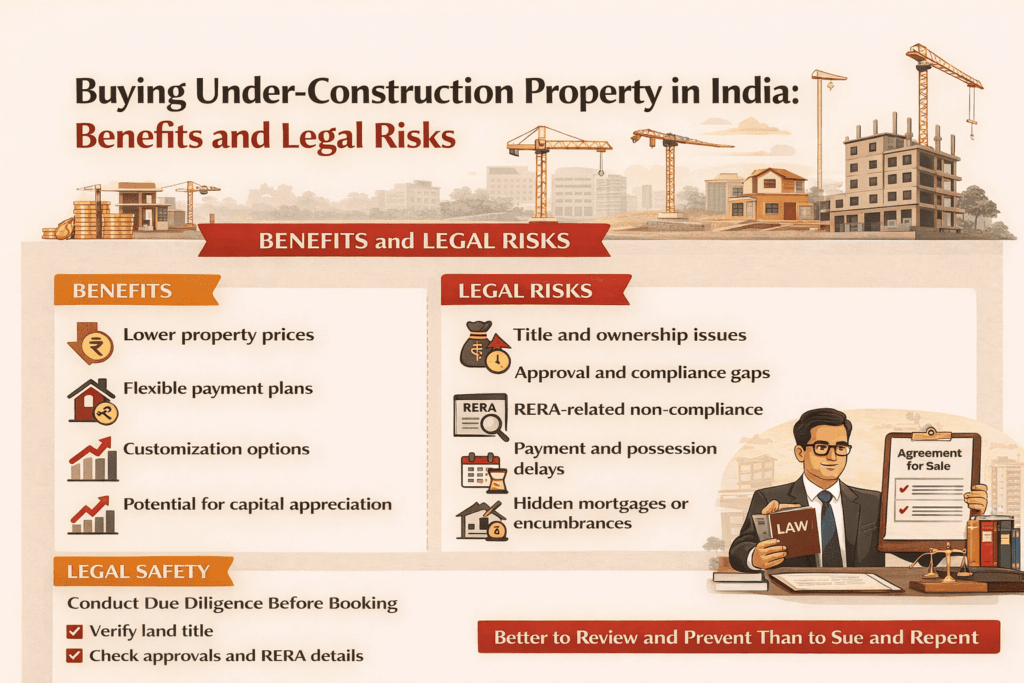
Buying an apartment/plot is one of the most important and emotional life decisions. Especially for the first time buyers, the paperwork seems overwhelming. One of the most important and the lengthiest documents is the Agreement for Sale.
Seeing the document, the buyer is generally at a total loss. The Builder’s representative would ask the buyer in an assuring tone to sign it, saying that it was just a formality. This is the time when the buyer should be most careful and take sufficient time to carefully review each clause/ paragraph.
However, most of the time, the clauses are far too numerous and contain legal jargon. It’s not logically possible for a layman to understand what is included and what is deliberately left out.
I hope that, after reading this article, you will be better equipped to navigate the confusing clauses and paragraphs. Although it is recommended to read the entire Agreement for Sale carefully, the 15 clauses mentioned in this article are the most important and must not be skipped.
1. Party Details
• The party details like name, Aadhaar number, PAN, address and contact number of both parties should be correctly mentioned
• The person signing on behalf of the Promoter/Builder is actually the Authorised Signatory as per the documents, like Board Resolution, etc.
2. Property Description & Specifications
• Land details and ownership trail
• Exact flat/plot number, area, floor, boundaries
• Carpet area (not super built-up)
• Undivided Share in Land (UDSL)
• Approved layout and sanctioned plan reference
3. Total Sale Consideration, Payment Schedule and Mode of Payment
• Break-up of basic sale price, GST, stamp duty, registration, maintenance, club charges, etc.
• Construction-linked or time-linked payment milestones
• Open-ended payment clauses such as “as demanded by the developer”.
• A RERA-registered bank account is given, into which all payments are to be made
4. Possession Date
• Clear possession date (not “approximate” or “expected”)
• Grace period, if any, clearly defined
• Possession is linked to the Occupancy Certificate / Completion Certificate
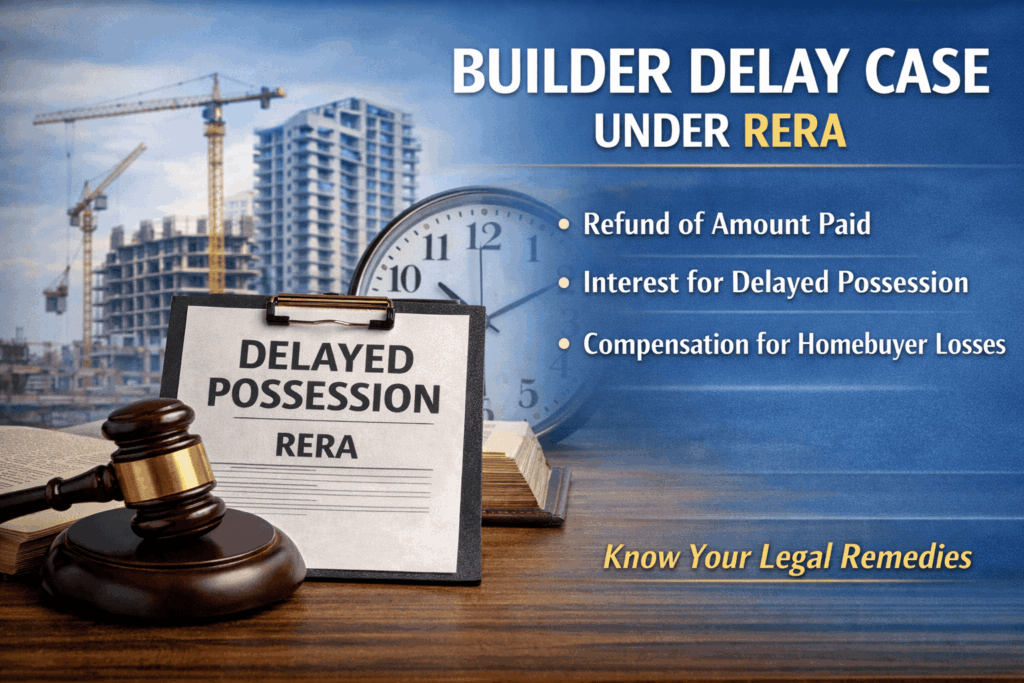
5. Delay Compensation Clause
• Buyer compensation for delay (As per State RERA Act Section 18/Rules)
• No unfair cap on delay liability
• Should not impose penalties on buyers for late payments, but limit the Builder’s liability
6. Force Majeure Clause
• Events genuinely beyond the builder’s control (natural disasters, war, etc.) as per the explanation given in the RERA Act Section 6
• Excludes internal issues like labour/building material shortage or funding problems
7. Title & Ownership Representation
• Builder’s declaration of clear and marketable title
• Authority to sell (especially in joint development projects)
• Promoter will pay all outgoings till registration of the Sale Deed
• No pending Litigation or Notice of Acquisition
• Defective Title Indemnity Clause
8. Encumbrances & Project Loans
• Disclosure of mortgages or bank charges on land/project
• Obligation to clear encumbrances before registration
• Link the final payment to the release of the charge by the lender. NOC in respect of the particular Unit from the financier
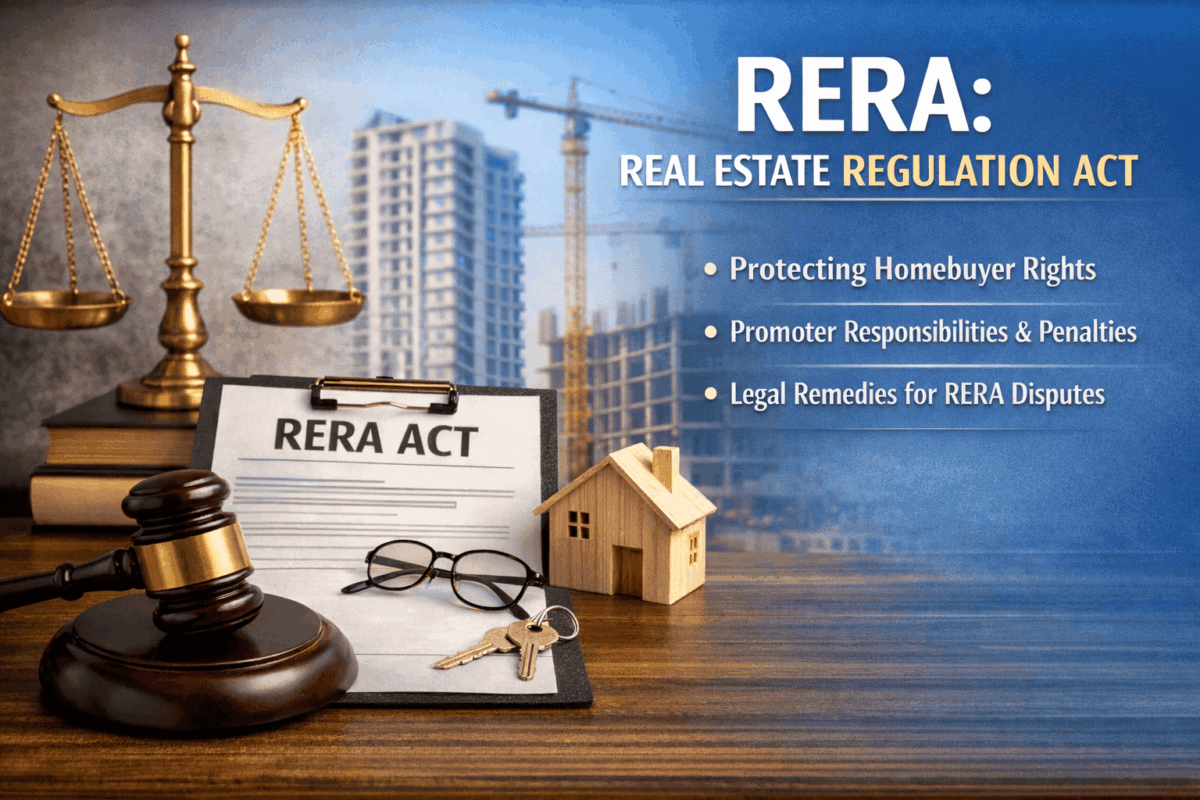
9. RERA Compliance Clause
• RERA registration number and project details
• Consistency with RERA disclosures
• The agreement must not contradict what is stated on the RERA portal.
• Agreement in conformity with RERA Format
• All sanctions, clearances and approvals are valid and subsisting and obtained through due process of law.
• Amenities and Facilities which are part of the project and those of the Apartment
10. Alterations & Changes Clause
• Limits on builder’s right to alter layout, amenities, or common areas
• Buyer consent required for material changes
11. Exit, Cancellation & Refund Rights
• Buyer’s right to cancel
• Refund timeline and interest payable
• Refund within a defined period with interest as per RERA Act/Rules
12. Maintenance, Common Areas and AOA/RWA
• When maintenance charges start
• Who maintains the property before society formation
• AOA/RWA must be formed once 50% Units are booked
• Definition of common areas
13. Defect Liability Period
• Minimum 5 years as per RERA
• Builder’s obligation to rectify structural defects
• This must be clearly stated.
14. Registration & Execution of Sale Deed
• Time limit for execution of Sale Deed (Within 3 months of receipt of Occupancy Certificate)
• Responsibility for stamp duty and registration fees
15. Dispute Resolution Clause
• Jurisdiction (local courts / RERA)
• Arbitration clause (should not exclude RERA rights)
• Arbitration cannot override statutory remedies under RERA
• Arbitrator/s must be detailed with the consent of all parties
Conclusion
It is advisable to never sign an Agreement for Sale without a legal review, especially for under-construction properties. Most buyer disputes arise not from fraud, but from poorly drafted clauses buyers never noticed. A legal review at this stage can save years of litigation later. For the detailed article on home buying, read here.
Disclaimer: This article is for informational purposes only and does not constitute legal advice. Professional consultation is recommended for individual cases.