

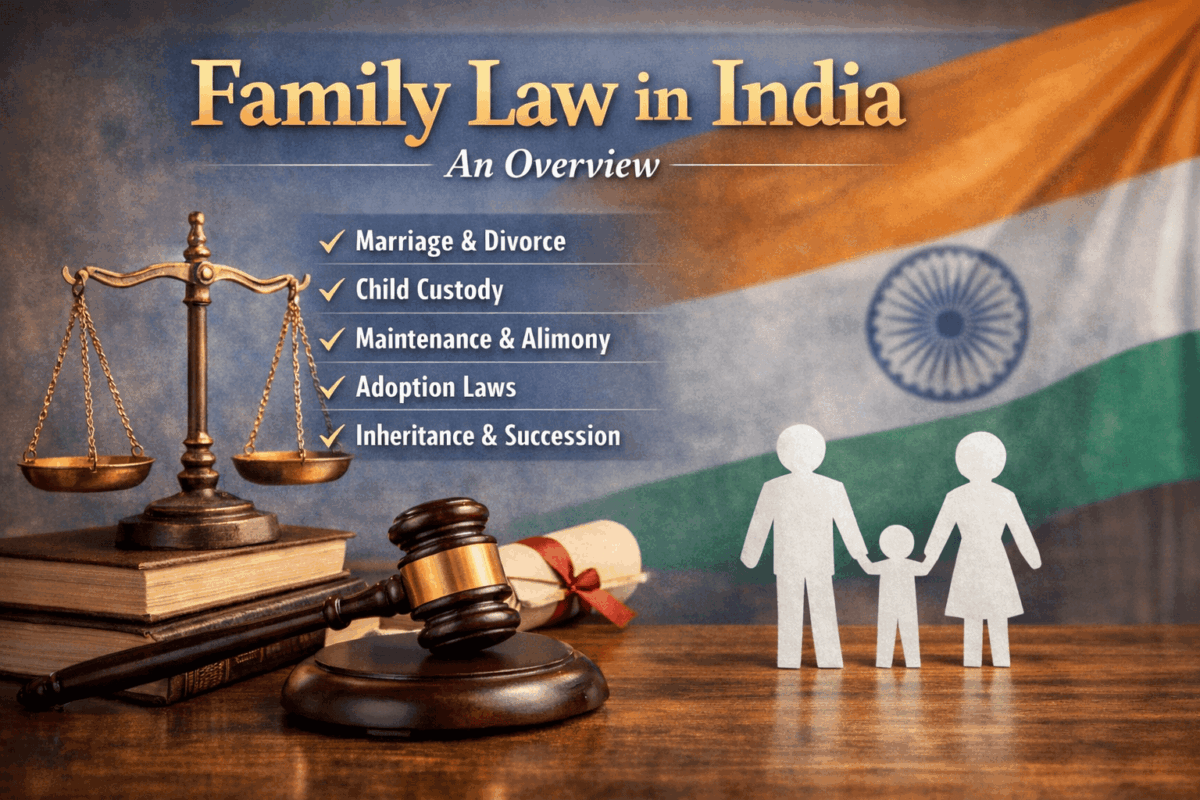
Family Law In India Explained in 8 Points
Adv (Col) Raj Kumar
Introduction
1. Family law is often narrowly associated with divorce and litigation. In reality, it governs many of the most significant relationships and decisions in an individual’s life. Most people encounter this law during emotionally charged moments, often without prior preparation or guidance, which can make the experience confusing and overwhelming.
2. A basic understanding of this law helps reduce this uncertainty. Rather than being viewed solely as a mechanism for resolving disputes, this law also plays a crucial role in structuring relationships and preventing avoidable conflicts. This article provides a general overview of Indian family law to help readers approach such matters with greater clarity and confidence.
1. What Is Family Law in the Indian Context?
3. This law governs relationships within a family and the legal rights and obligations that arise from them. It addresses matters such as marriage, divorce, maintenance, child custody, and succession. These areas directly affect individuals at important stages of their personal lives.
4. In India, this law does not operate under a single, uniform statute. Instead, it comprises a combination of religion-specific personal laws and also some secular legislation. Depending on the parties involved and the nature of the issue, different legal provisions may apply, which often contributes to the perception that this law is complex.
5. Personal laws regulate aspects such as marriage, divorce, and inheritance for different communities, while secular statutes provide protections that apply across religions, particularly in areas such as domestic violence, child welfare, and adoption. Together, these laws form a comprehensive framework intended to address a wide range of family-related issues.
6. Although this law may appear intricate at first glance, its underlying objective remains consistent: to regulate family relationships in an orderly manner and to provide remedies when disputes arise. Understanding this basic structure allows individuals to approach family-law matters with greater clarity. An important aspect of family law is senior living and their rights in the overall family structure.
2. Common Situations
7. Most individuals do not engage with family law deliberately. Instead, they encounter it through life events. These interactions often occur at moments when legal considerations are not immediately apparent but are nonetheless significant.
8. This law commonly comes into play at the time of marriage, including registration and questions relating to inter-religion or inter-caste unions. It also governs financial responsibilities between spouses, particularly in matters of maintenance and support. When children are involved, issues of custody, guardianship, and welfare assume central importance.
9. In more challenging circumstances, this law provides remedies in cases involving domestic violence or marital disputes. It also plays a crucial role in succession and inheritance, particularly when immovable property is involved, and no testamentary arrangements have been made.
10. In many instances, legal advice is sought only after complications have arisen. A basic awareness of family law can help individuals recognise potential issues early and respond in a timely and informed manner.
3. The Biggest Misconception About Family Law
11. A common misconception about this law is that it is limited to divorce proceedings. This narrow understanding often leads individuals to engage with the law only after disputes have escalated.
12. In reality, this law has a much broader scope. It governs the formation of relationships, defines legal rights and responsibilities, and provides mechanisms to address issues before they develop into conflicts. Its role extends beyond dispute resolution to the guidance and regulation of family arrangements.
13. Viewing this law solely as adversarial contributes to unnecessary anxiety. A broader understanding allows individuals to approach it more thoughtfully and proactively.
4. Family Law as a Preventive Framework
14. An important yet often overlooked aspect of this law is its preventive function. Legal awareness at an early stage can reduce uncertainty and help avoid prolonged disputes.
15. Measures such as timely marriage registration, clarity regarding financial obligations, and informed decisions relating to children can significantly minimise future conflict. Similarly, succession planning, such as executing a Will can prevent ambiguity and disputes among family members.
16. In this sense, family law functions not only as a remedial system but also as a framework that promotes stability and clarity within family relationships.
5. Why Family Law Often Feels Intimidating
17. For many individuals, the first interaction with family law occurs during periods of emotional stress, such as marital discord, concerns involving children, or the loss of a family member. This emotional context often heightens anxiety around legal processes.
18 Complex legal language, unfamiliar procedures, and the perception that courts are inherently adversarial further contribute to this discomfort. The absence of reliable guidance can lead individuals to rely on informal advice or assumptions, which may be inaccurate.
As a result, even situations where the law provides clear remedies may feel overwhelming.
6. How Understanding the Basics Makes a Difference
19. A foundational understanding of family law can significantly change how individuals experience legal issues. Awareness of basic rights and obligations enables calmer assessment and more informed decision-making.
20. Such understanding helps individuals ask relevant questions, recognise when professional advice is necessary, and avoid impulsive actions driven by fear or misinformation. Importantly, this does not require detailed legal expertise. Even basic familiarity can provide meaningful reassurance.
7. When Legal Advice Becomes Necessary
21. While general legal awareness is valuable, certain situations require timely professional advice. Matters involving disputes, child welfare, financial claims, or long-term consequences should be addressed with appropriate legal guidance.
22. Individuals with a basic understanding of family law are better equipped to engage effectively with legal counsel, communicate concerns clearly, and understand available options. Early consultation often helps prevent escalation and ensures informed decision-making.
8. Legal Framework Governing Family Law in India
23. A combination of personal laws and secular statutes governs Indian family law. Laws such as the Hindu Marriage Act, 1955, the Special Marriage Act, 1954, and the Hindu Succession Act, 1956 regulate matters relating to marriage, divorce, and inheritance, depending on the parties involved. In addition, secular legislation addressing domestic violence, maintenance, adoption, and child welfare applies across communities. Together, these laws form the legal framework through which family relationships and disputes are addressed in India.
Conclusion
24. Indian family law may appear complex, but its purpose is both practical and protective. It seeks to regulate family relationships, safeguard individual rights, and provide structured remedies in the event of difficulties arising.
25. Approaching family law with basic awareness allows individuals to view it not as a threat, but as a system designed to address real-life situations thoughtfully and fairly. Family law is not only about resolving disputes, but it is also about prevention, guidance, and clarity in deeply personal matters.
Disclaimer: This article is for informational purposes only and does not constitute legal advice. Professional consultation is recommended for individual cases.