

Home Buying In India: A 10-point Guide For First-Time Home Buyers
Adv (Col) Raj Kumar
- Buying a home in India is a major financial and emotional decision. For first-time home buyers, understanding the home-buying process in India, legal requirements, and common risks is essential to avoid costly mistakes.
- This guide explains everything you need to know about buying a house or flat in India, from planning your budget to registration and possession.
1. Some Basic Concepts in the Home Buying Process in India
- The home-buying process in India involves multiple legal, financial, and regulatory steps. Whether you are buying an apartment, flat or independent house, proper planning and due diligence are critical.
- Types of Residential Property in India
- Apartment / Flat
- Independent house
- Gated community or township
- Residential Plot/Site
- Senior Living
- When buying a flat, you acquire:
- Ownership of the apartment unit
- Undivided share of land (UDSL)
- Carpet Area vs Super Built-Up Area (SBUA) – As per RERA rules, property pricing must be based on carpet area, which is the actual usable space inside the home. However, even today, some builders mention SBUA. Buyers should avoid confusion created by super built-up area calculations.
2. Budget Planning for Home Purchase
- Before searching for properties, define your total budget clearly. Points to consider when buying a home typically are: –
- Property price
- Down payment
- Home loan EMIs
- Payment Schedules
- Stamp duty and registration charges
- GST on under-construction property
- Legal and documentation fees
- Maintenance and society deposits
- Post possession interior work
3. Location and Project
- After deciding on your budget comes the choice of the location. Location may include the city, the area within that city and the particular project in that area that you like after shortlisting. These decisions are crucial and need a detailed deliberation within the family. The choice of the location within the city may depend on its proximity to your workplace and facilities like schools, hospitals and connectivity, etc.
- When it comes to the project, detailed research is a must. The builder’s reputation and track record in past projects play a vital role. It may be worthwhile to visit past projects of the builder and talk to the residents there.
4. Check RERA Registration Before Buying a Home
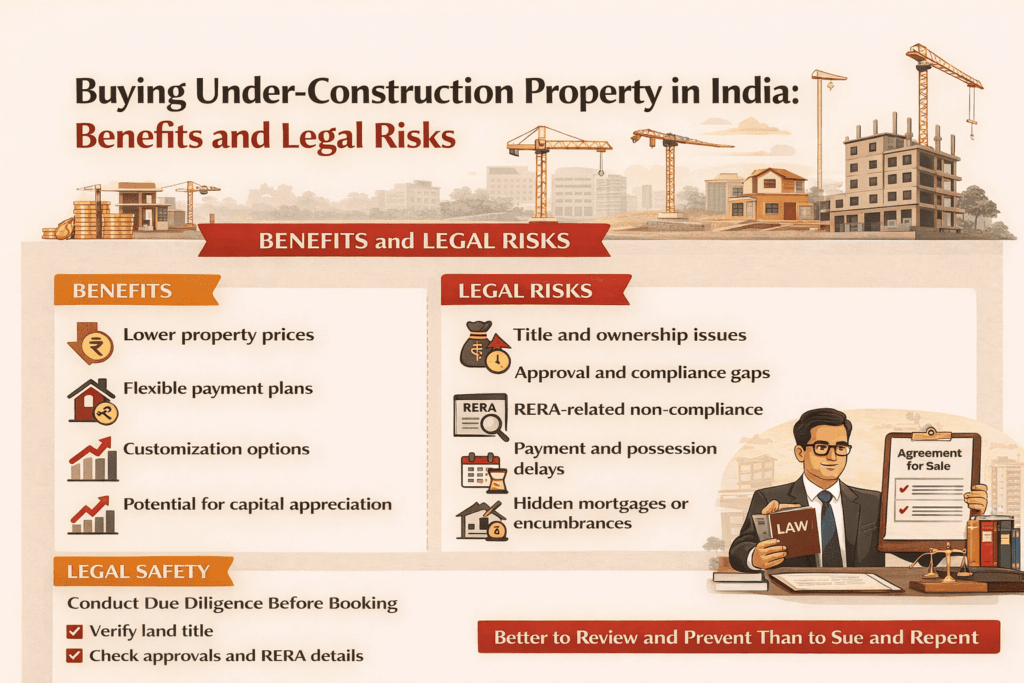
- The Real Estate (Regulation and Development) Act, 2016 (RERA) protects home buyers and ensures transparency. Always verify project details on the official State RERA website before booking. The RERA is important for home buyers as it ensures: –
- Mandatory registration of residential projects
- Disclosure of possession timeline
- Clear carpet area declaration
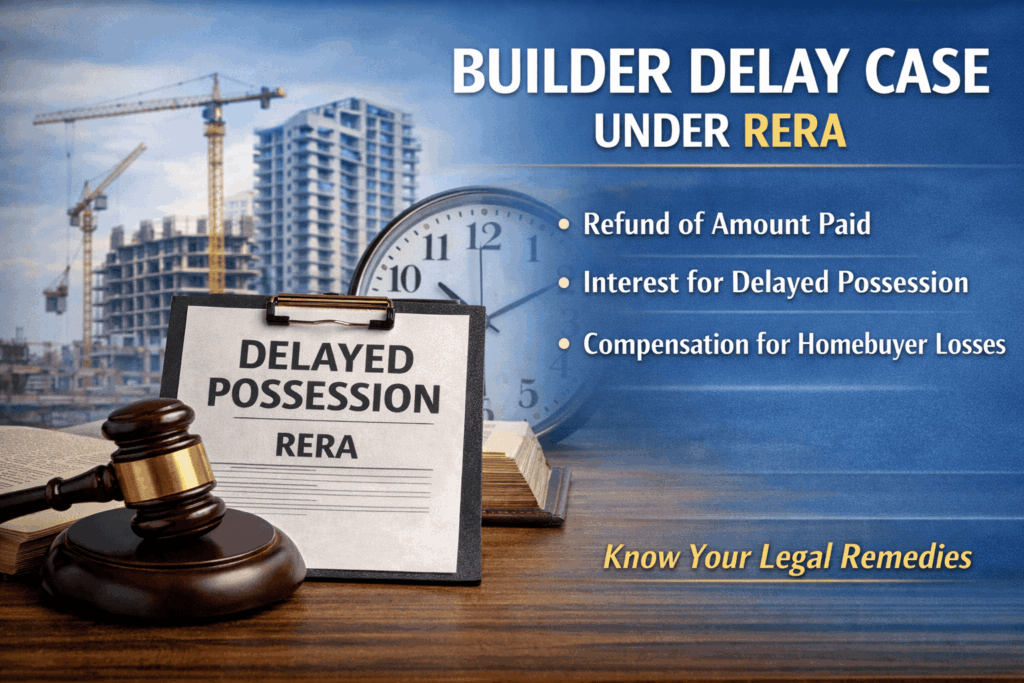
- Buyer compensation for delays
5. Legal Due Diligence Before Buying Property
- Legal verification is the most critical step in the property buying process. For this, you will have to obtain project documents from the builder. Most builders charge a token advance for sharing the project documents. Be careful to pay as little money as a token advance as possible.
- Property Document Verification Checklist – Some of the important documents to be verified by a real estate lawyer are as follows:
- RERA registration certificate
- Title deeds and chain of ownership
- Encumbrance Certificate (EC)
- Approved building plans
- Land use permissions
- NOCs from various agencies
- Commencement Certificate
- Occupation Certificate (for completed projects)
- The list above is only indicative, and a real estate lawyer may suggest or request additional information/ documents. Failing to conduct thorough legal due diligence can lead to disputes, financial losses, and resale complications.
6. Agreement For Sale: What Home Buyers Must Know
- The Agreement for Sale is a legally binding contract between the buyer and seller. A draft format of the Agreement for Sale has been laid down by the RERAs of most of the State Govts. One should ensure that the Agreement for Sale shown by the builder conforms to this format so that no important clauses are left out. Click here for a detailed article on the Agreement for Sale.
- Key Clauses in Agreement for Sale (All verbal promises must be recorded in writing to be legally enforceable.)
- Land ownership details.
- Total sale consideration
- Payment schedule
- Possession date
- Delay penalty clause
- Flat specifications and amenities
- Cancellation and refund terms
- Defect Liability Period
7. Stamp Duty and Property Registration
- Stamp duty and registration are mandatory for legal ownership. Legal ownership transfers only after registration of the sale deed. Some of the steps are as follows: –
- Payment of stamp duty (varies by state)
- Execution of the sale deed
- Registration at the Sub-Registrar Office
8. Possession and Handover of Flat
- Before taking possession: –
- Inspect the flat thoroughly
- Check construction quality and fittings
- Ensure water and electricity connections
- Obtain a possession letter
18. For new constructions, possession should be taken only after receiving the Occupation Certificate (OC).
9. Post-Purchase Formalities After Buying a Home
- After registration and possession, complete the following. These steps ensure hassle-free ownership and future resale.
- Mutation in municipal/panchayat records
- Transfer of electricity and water connections
- Submission of documents to the housing society
- Safe storage of legal documents
10. Common Mistakes First-Time Home Buyers Make
- Avoid the undermentioned common errors. Being cautious during purchase saves years of legal trouble.
- Buying without legal verification
- Ignoring RERA compliance
- Paying money without agreements
- Trusting verbal assurances
- Not checking the delay penalty clauses
Conclusion
- Buying a home in India requires awareness, patience, and legal clarity. With proper planning, RERA verification, and professional legal support, first-time home buyers can confidently navigate the real estate market. A well-informed buyer is a safe buyer—and in real estate, safety is everything.
Disclaimer: This article is for informational purposes only and does not constitute legal advice. Professional consultation is recommended for individual cases.