
Contract Drafting in India: A 10 Point Legal Guide for Businesses
By Adv (Col) Raj Kumar
Introduction
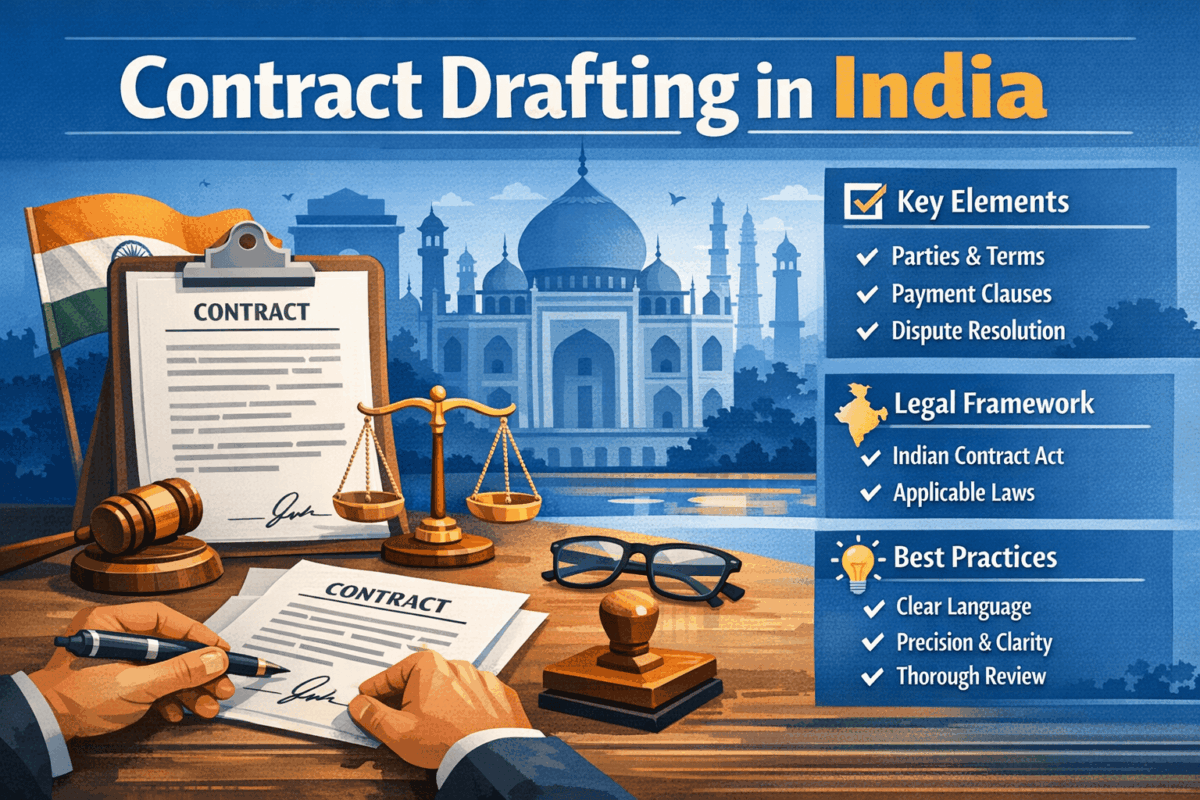
- Contract drafting is one of the most critical legal functions for businesses in India. From startups and MSMEs to large corporations, well-drafted contracts form the foundation of commercial relationships. In the Indian legal system, contracts are governed primarily by the Indian Contract Act, 1872, as amended, making precision and compliance essential.
- We often see that most commercial disputes arise not because of bad intent, but due to poorly drafted or ambiguous agreements. This article explains the importance of contract drafting in India, essential clauses, best practices, and why professional legal drafting is crucial for business growth.
1. What is Contract Drafting?
- Contract drafting is the process of preparing a legally enforceable agreement that defines the rights, duties, obligations, and remedies of the parties involved. In India, a contract becomes legally valid when it satisfies the requirements under Section 10 of the Indian Contract Act, 1872. Proper contract drafting ensures:
- Legal enforceability
- Risk mitigation
- Regulatory compliance
- Clear commercial understanding
- Reduced litigation
2. Importance of Contract Drafting for Indian Businesses
- Indian businesses operate in a highly regulated environment. Poorly drafted contracts can result in financial losses, regulatory penalties, and prolonged litigation. Key benefits of professional contract drafting include:
- Prevention of disputes
- Protection of business interests
- Compliance with Indian laws
- Clear allocation of risk
- Stronger commercial relationships
3. Essential Elements of a Valid Contract Under Indian Law
- According to the Indian Contract Act, 1872, every valid contract must include the following. Absence of any of these elements can render a contract void or unenforceable.
- Offer and Acceptance
- Lawful Consideration
- Competent Parties
- Free Consent
- Lawful Object
- Certainty of Terms
4. Types of Business Contracts Commonly Drafted in India
- The following are the commonly seen contracts:
- Shareholder Agreements
- Partnership Deeds
- Employment Agreements
- Service Agreements
- Vendor and Supplier Contracts
- Non-Disclosure Agreements (NDAs)
- Joint Venture Agreements
- Franchise Agreements
- Licensing Agreements
5. Key Clauses in Indian Business Contracts
- A well-drafted Indian contract typically includes:
- Definitions and Interpretation
- Scope of Work
- Payment and Taxation Terms
- Confidentiality and Non-Compete
- Termination and Exit Clauses
- Indemnity and Limitation of Liability
- Dispute Resolution and Arbitration
- Governing Law and Jurisdiction
- Force Majeure
- Amendment and Waiver
- Dispute resolution clauses often specify arbitration under the Arbitration and Conciliation Act, 1996, as amended, which is widely preferred in India.
6. Contract Drafting Process
- Although the drafting of each contract requires a deliberate methodology, the following are the common steps followed while drafting a good contract:
- Understanding the business transaction
- Identifying legal and regulatory requirements
- Risk assessment and allocation
- Drafting precise and unambiguous clauses
- Negotiation and revisions
- Final execution and stamping
- Registration where required
- Stamp duty and registration requirements vary by state in India and must be carefully addressed.
7. Common Contract Drafting Mistakes
- Some of the common mistakes that can invalidate contracts or weaken enforcement are as follows:
- Using generic templates
- Ignoring Indian statutory requirements
- Vague termination clauses
- Absence of dispute resolution mechanisms
- Improper stamping and registration
- Failure to define jurisdiction clearly
8. Best Practices for Contract Drafting in India
- The list can be long, but some of the practices that should be followed while drafting a contract are:
- Draft contracts tailored to Indian laws
- Use clear and simple language
- Define obligations precisely
- Include arbitration and jurisdiction clauses
- Ensure proper stamping
- Periodically review and update contracts
9. Contract Drafting vs Contract Review
- Contract drafting involves creating a new agreement, while contract review focuses on analysing risks in existing contracts. Both are essential for legal risk management.
10. Role of a Corporate Lawyer in Contract Drafting
- A corporate lawyer ensures:
- Compliance with Indian laws
- Commercially sound drafting
- Risk minimization
- Enforceable dispute resolution clauses
- Strong negotiation support
Conclusion
- Contract drafting is a vital legal function for Indian businesses. Well-drafted contracts reduce disputes, protect interests, and ensure smooth commercial operations. Engaging a professional for contract drafting ensures long-term legal security and business success.
Disclaimer: This article is for informational purposes only and does not constitute legal advice. Professional consultation is recommended for individual cases.